
Coding Skills
Discover Where to Level Up
Coding Skills: Discover Where to Level Up
Writing high-quality software requires more than just making the code work. It requires strong coding skills across implementation, design, safety, testing, and documentation.
The Coding Skills feature helps teams understand how their code measures up, identify weak spots, and guide targeted improvements based on objective metrics.
Code Implementation
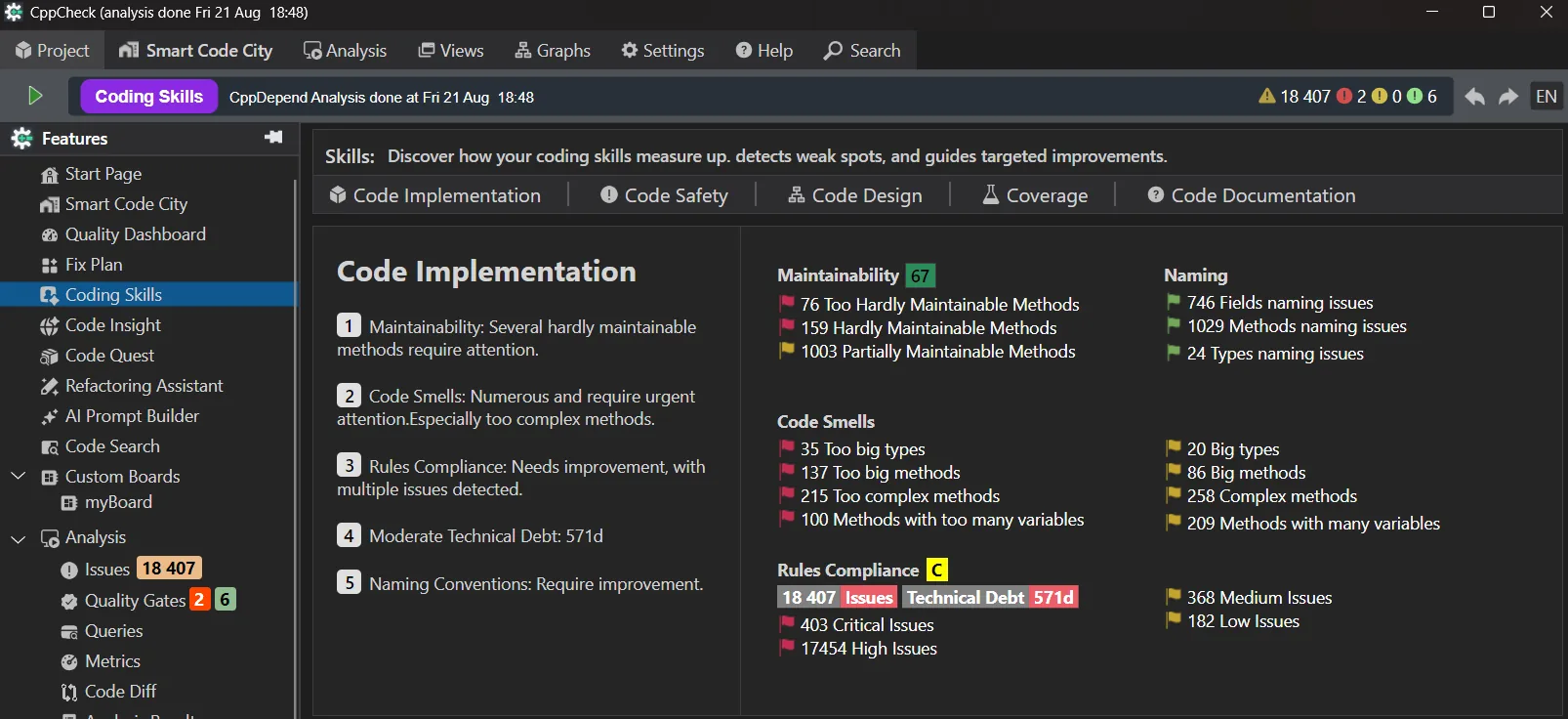
Code Implementation focuses on how the code is written at a low level: clarity, complexity, and maintainability.
- Maintainability ratings and trends
- Detection of overly complex methods and types
- Identification of common code smells
- Rule compliance issues and technical debt impact
- Naming conventions and consistency
This helps developers quickly spot code that is hard to maintain and prioritize refactoring efforts where they matter most.
Code Design
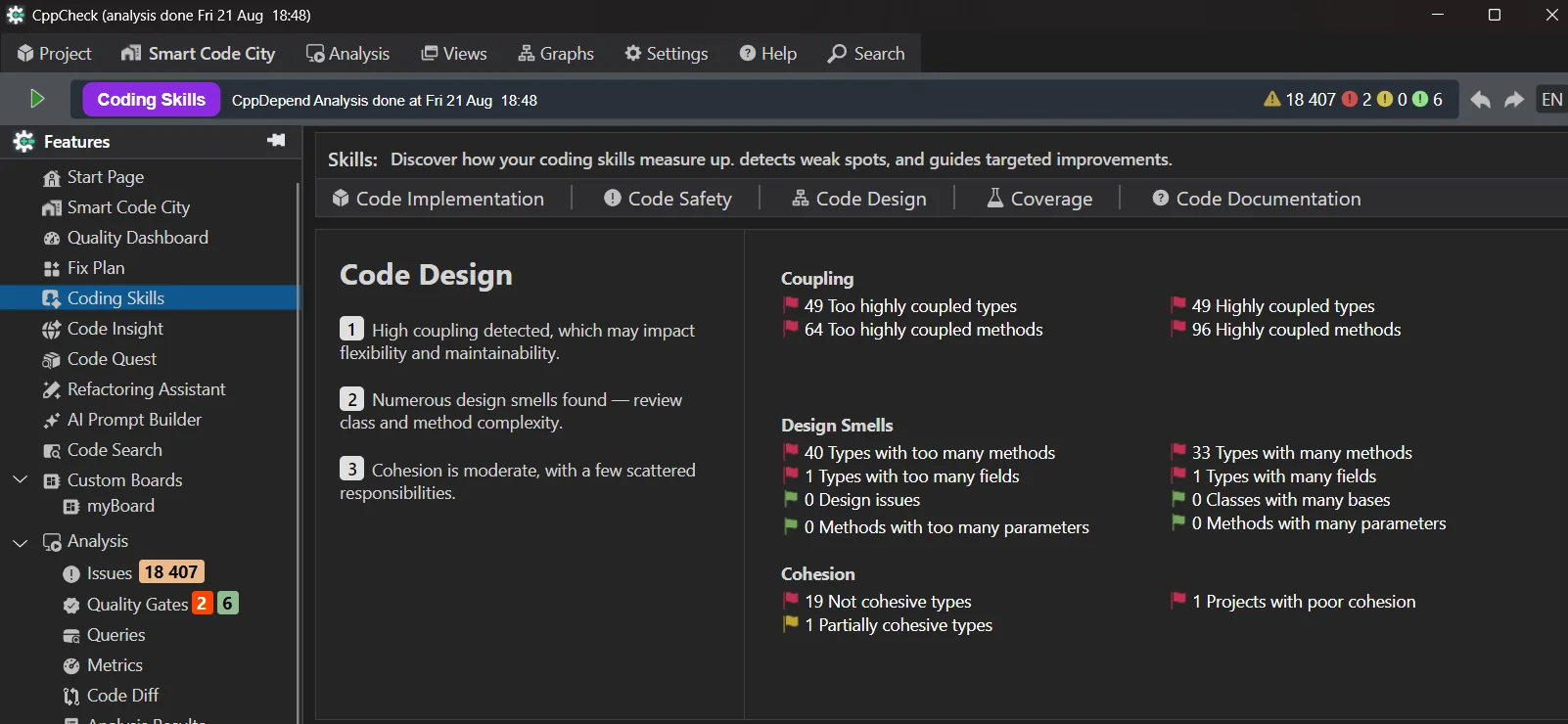
Code Design evaluates the overall structure and architecture of the codebase. It highlights design weaknesses that may limit scalability or increase long-term costs.
- Detection of overly coupled components
- Identification of large or unbalanced types
- Assessment of abstraction and responsibility distribution
- Design rule violations and architectural smells
These insights help teams improve modularity, readability, and long-term evolvability.
Code Safety
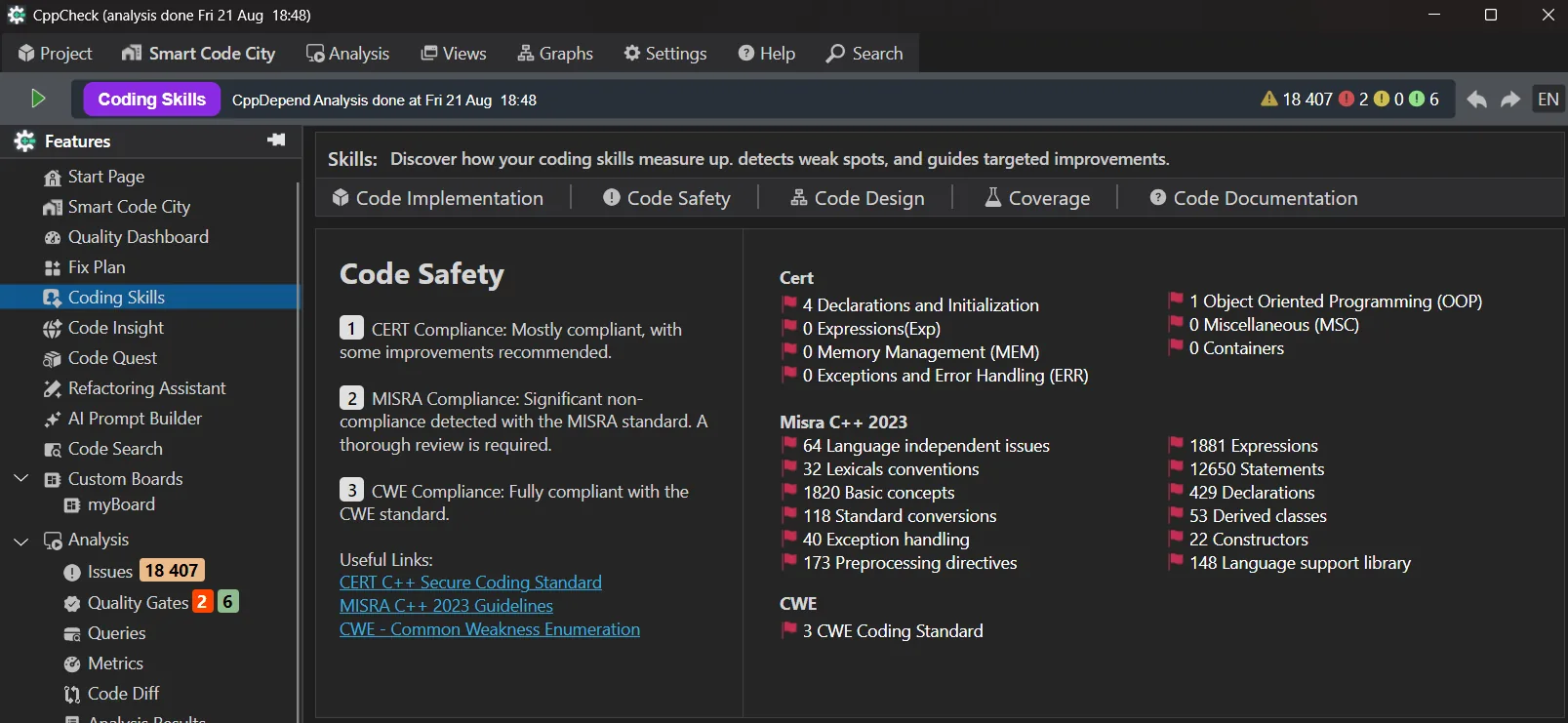
Code Safety evaluates how well the code complies with industry-recognized safety and security guidelines.
- Compliance with CERT C / CERT C++ guidelines
- MISRA C and MISRA C++ rule analysis
- Detection of unsafe constructs and risky patterns
- Clear classification of critical and high-risk issues
This allows teams to reduce runtime risks, improve robustness, and meet safety requirements.
Code Coverage
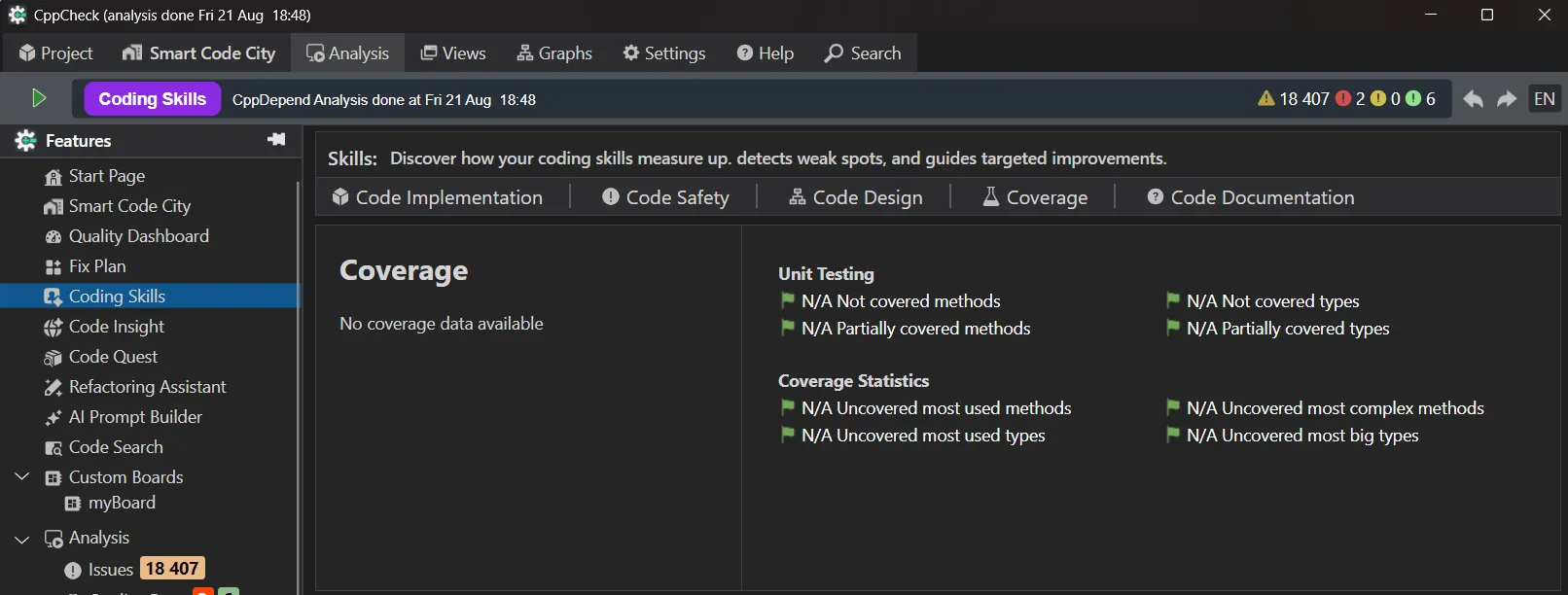
Code Coverage highlights how well the codebase is exercised by tests and where testing efforts should be reinforced.
- Visualization of covered and uncovered code
- Identification of high-risk areas with insufficient tests
- Support for focusing test effort where it provides the most value
Better coverage means higher confidence when refactoring or adding new features.
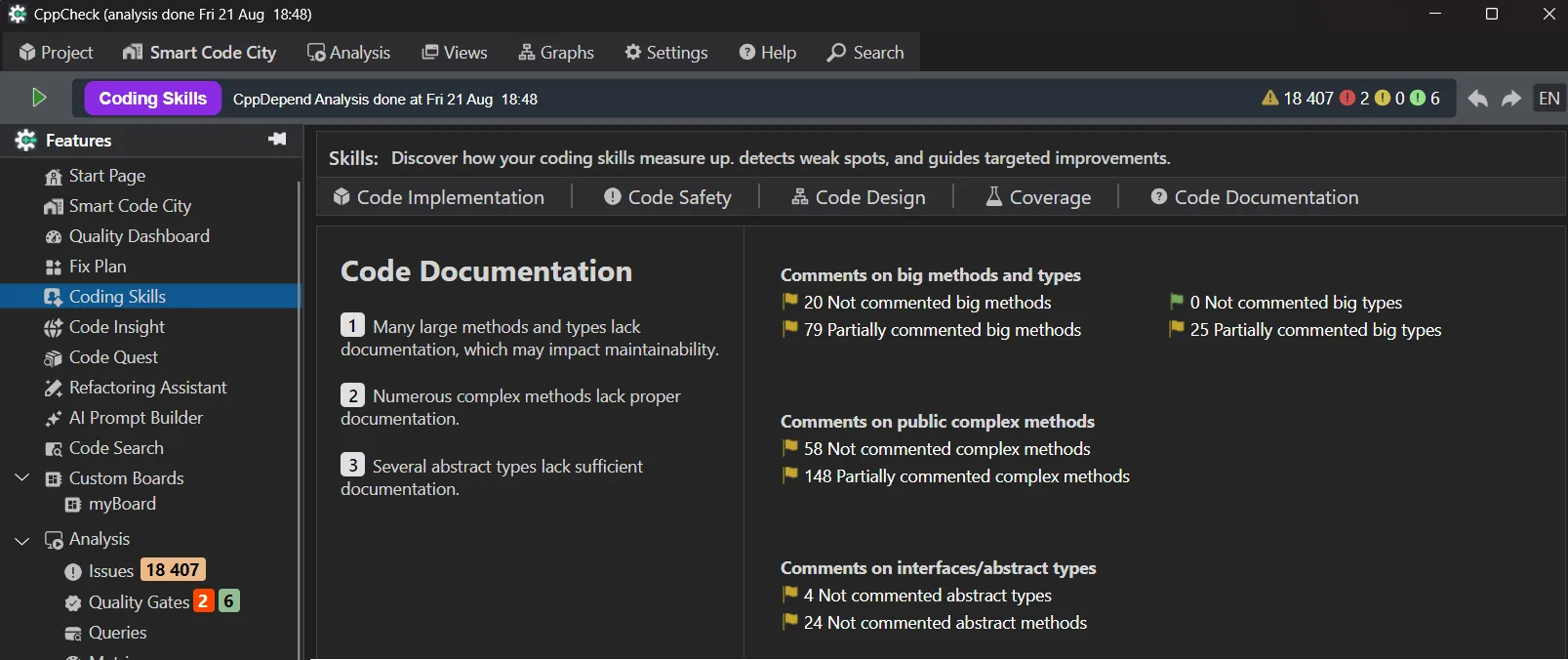
Code Documentation
Code Documentation assesses how well the code explains itself to future readers.
- Detection of undocumented public types and methods
- Consistency of documentation practices
- Identification of areas where documentation would improve maintainability
Clear documentation reduces onboarding time and helps teams share knowledge effectively.
From Metrics to Skill Improvement
Coding Skills transforms static analysis results into a clear learning and improvement path. Teams can measure progress over time, prevent regressions, and continuously improve their development practices.
By making strengths and weaknesses visible, Coding Skills helps developers grow their expertise while delivering higher-quality software.
Key Benefits
- ✓Individual skill assessment
- ✓Team-level skill visibility
- ✓Implementation, Design & Safety scores
- ✓Measurable improvement tracking
Try Coding Skills with CppDepend
Start your 14-day free trial with full access to all features. No credit card required.